Dude, Where's My Update? #18
An obit, a mea culpa, a rage against the AI machine, Eisner talk, my cats. We've got it all this time!
I keep promising to do that Neon Ichiban/Sweet Shop discussion piece. Next month. Next month I will commit.
The Updates, As Promised
If this is going out when expected, my next SOLRAD review is going live tomorrow (June 8.) I took a look at the now (3 fold) Eisner-nominated series “Assorted Crisis Events” and asked, in the parlance of one of my favorite podcasts, WHAT….is going on here? I think you’ll find it illuminating, not least because I think the Eisner’s nominated the wrong issue for best single issue.
 Elias Rosner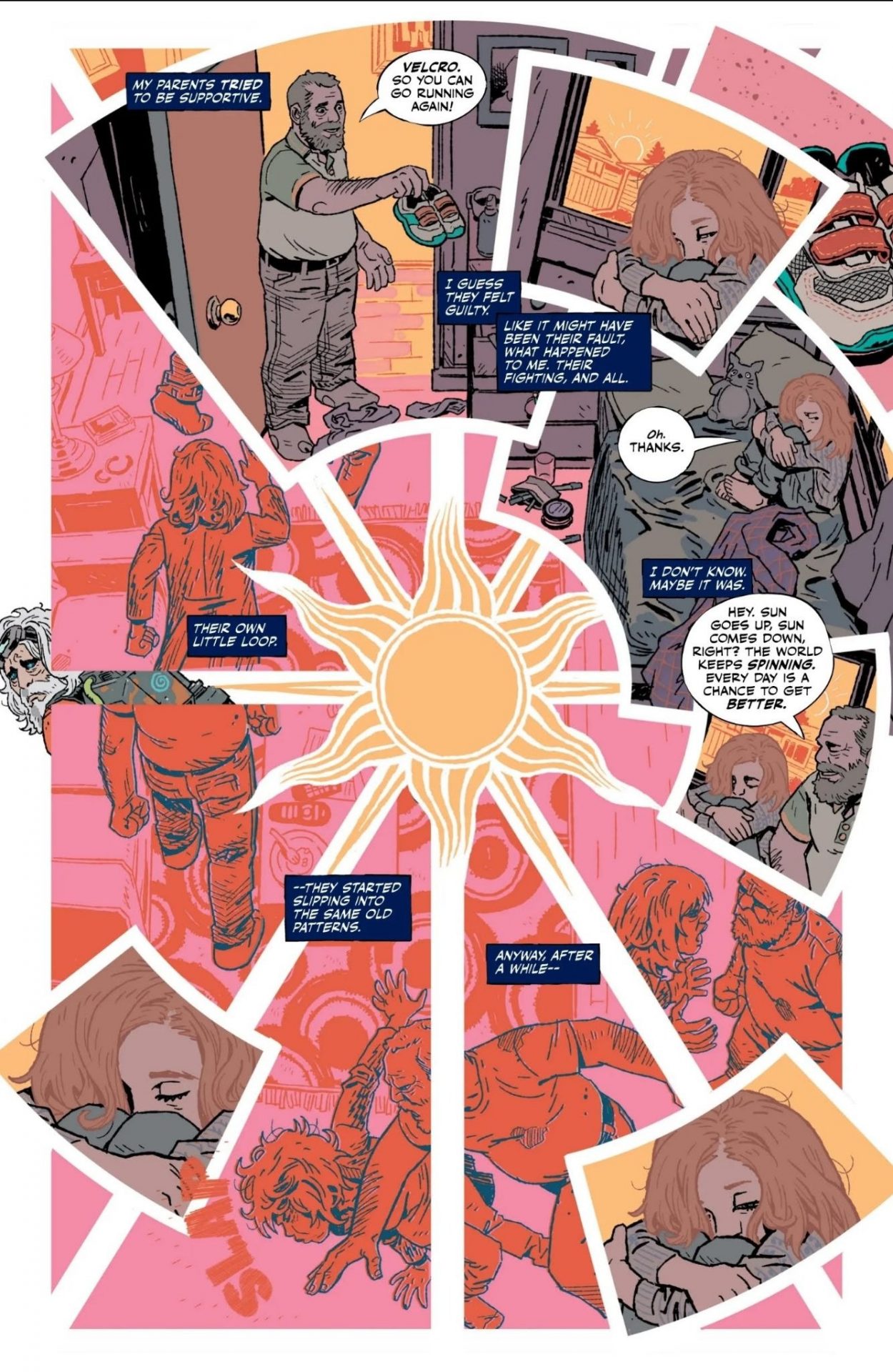
That’s not the only thing the Eisners got wrong this time around though.
Eisner Nominations
Oh right. The Eisner noms are out! More on that in a sec. Putting aside my own subjective gripes about a couple of the nominees (books, not people,) the Eisner board had the ignominious honor of nominating a book containing an AI-generated comic, which has since been withdrawn. My first reactions to hearing this were:
- Annoyance.
- Fury.
- Confusion as to how this could happen.
- Bafflement that there wasn’t an official “no AI” policy.
- Curiosity as to which nominee it was.
- Absolute confusion when they said “Stardust the Super Wizard” because I had shouted this out in my end of year list and was a backer of the original Zoop campaign.
- Shame at having promoted AI slop and not noticing. I am pretty vocally an AI hater and did not clock it at all.
- Fury at the comic creator for doing this (who I won’t be naming because no publicity for you!)
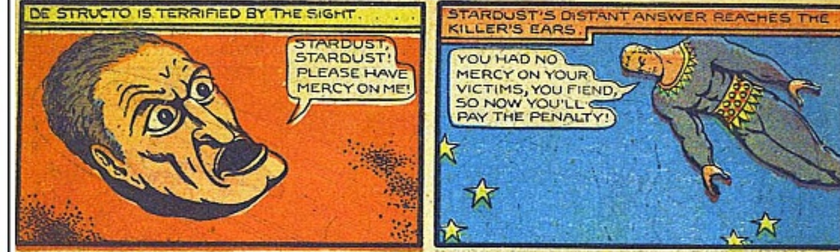
Now comes the part where I defend myself for not noticing. No need to defend the rest because the Eisner Judges and editor Van Jensen got this Publisher’s Weekly article do that for them and I don’t need to add to the thrashing. As to whether the book met the threshold for nomination in the first place…anthologies are notoriously uneven. It is rare for any anthology or anthologies series to be all bangers. There will always be some real duds and the offending story was a singular page out of, like, 200. So, I get why it could make the cut even with the (absolutely) subpar AI-generated page.
For the most part, the “Stardust” anthology is a wild, weird, fun tribute to an absolutely bonkers creation. There’s a lot of artistry on display. That framing device of an alien trying to make sense of our culture via Stardust? Great! It’s presence also does some narrative excusing for any of the stories that are, by all accounts, terrible. Some intentionally so, some…well, yeah.
Enough beating around the bush. Let’s talk Big Sloppa.
The page in question is…bad. No two ways about it. It is dull. Incomprehensible. And not in the fun way the other homages, or even the originals, are. It’s a pretentious piece “about” the nature of the public domain and creativity that has little to say and even less to offer. I initially just kinda breezed past it in the original.
I didn’t even blink twice when the corresponding commentary page mentioned how AI could never replace real art and how the page is clearly the work of artificial intelligence. I thought that was a joke, made at the expense of the creator or maybe in tandem! Like, the story was so blah and soulless that only AI could have created it. Maybe that’s my reading comprehension failing me. I dunno.
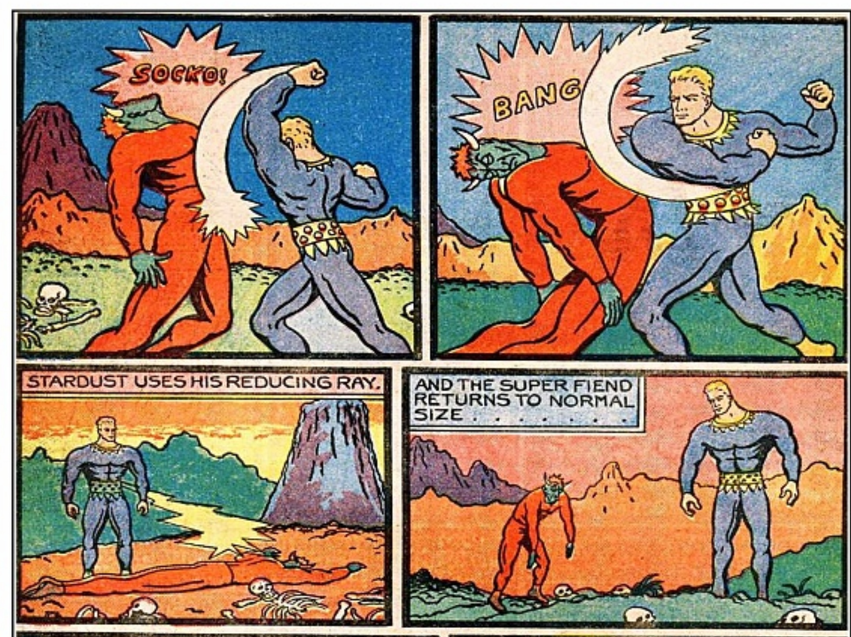
So how did I get duped? Well, mostly because the page looks more like a Fumetti comic than AI slop.
While it doesn’t use photographs, the page is pretty straightforwardly presented as a collage using cut up pieces of Fletcher’s comic strips - all in the public domain, as the page’s wrangler is quick to use as a fig leaf - rearranged and recontextualized with new text. A collage made of poorly juxtaposed and strangely cropped panels that, kinda, sorta look like a coherent sequential story, insofar as Hank’s originals are "coherent,” but a collage nonetheless. Oh, and said text is lettered with all the grace of a 2000s powerpoint presentation and written like someone fed a Grant Morrison monologue into google translate, had a native speaker play telephone with the information, and then translate it back.
Once I heard that it was AI generated, I assumed from my secondary quick glance that it was just the text that was generated, with the panels just kinda…plucked from the corpus. As I said, the original “Stardust” tales have a tenuous grip on basic storytelling essentials or panel-to-panel logic and it just…didn’t click that the weird fidelity shifts and coloring was anything but poorly zoomed in screenshots or crappy scans.
Upon closer inspection though, the panels have all the tell-tale signs of AI generated images. Lines that go to nowhere. Strange duplications. The stylization and lack of “realism” hid these problems more easily because, well, I assumed someone drew it and just fucked up! Doesn’t excuse those panels from getting into a published book even if it were human made but it happens. People get sloppy and others don’t catch it.
Like me.
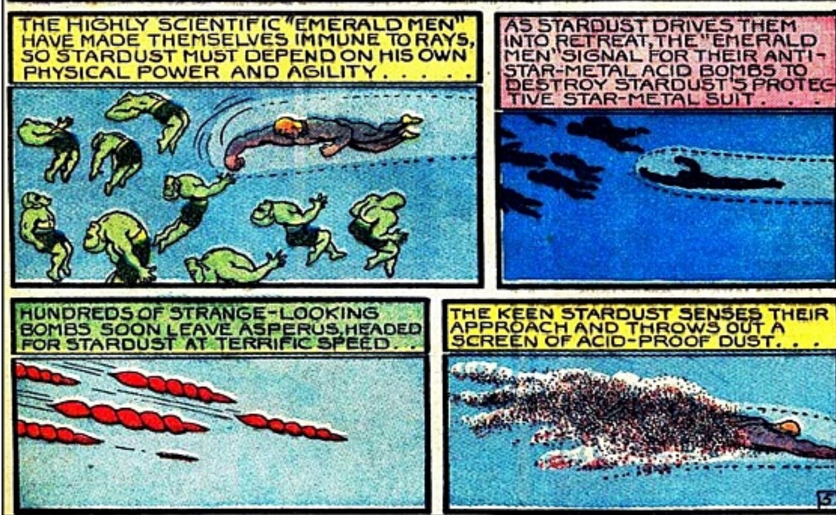
That the page has nothing to say, nothing to add, should have been a tip off it was AI generated but, like, I’ve read so many crappy comics with delusions of insight that are (or were) by living, breathing people that it never crossed my mind. I guess I need to read more LLM-generated text to build up my understanding of this garbage? Ugh.
I have to wonder: would I have been so harsh on the page had I continued to not know it was AI generated? I suspect I would give it a little more grace and, perhaps, consideration. But AI is a poisoned well. Anything coming from it is fetid and dangerous. There were no decisions made that can be examined and evaluated, no human choices to be read into. A machine guessed what the median pixel or word should be for the given parameters and shat out a page that was then massaged into something minorly coherent.
What a sour taste in my mouth this leaves me with. AI is an artistic bane and it is poisoning formerly mundane tools and techniques in its ever-reaching quest to turn it all into grey goo. Whatever benefit the tech could’ve (maybe) had in an alternate universe does not exist here and shame unto the page’s maker, if I can even use that term. Shame!
Real Work by Real Writers
Here’s the part of the newsletter where I brag about being a three-time* Eisner nominated writer! As I said last year, I’m not technically nominated nor is this publication on the ballot - two sites that I’ve contributed to, SOLRAD and Shelfdust, are. I feel like a win for SOLRAD would be more of a win for me because I had 5 pieces published there in 2025 as opposed to the 2 on Shelfdust BUT I’m very proud of all my contributions there.
If those numbers seem low, it’s because I’m not a great pitcher. Takes a lot for me to gather my thoughts and craft one. I usually figure out what a piece is about as I write it. Oftentimes what I see at the start isn’t where I end up so I get in my head about putting an idea out there before I have the corpus of thought written out to back it up. I’m getting better, but not quite monthly pitches yet.
OK. One last shoutout before the last section. If you haven’t read my “Walking Dead” review for Shelfdust, please do! This link is to the extended essay version here at House of Ideas, Powers of Secrets and I think it’s fun to compare and contrast to the shorter, more focused version Steve published over there.
If you’re not a free or paid member, you won’t be able to read the longer version so maybe this is the kick to sign up :)
Obits
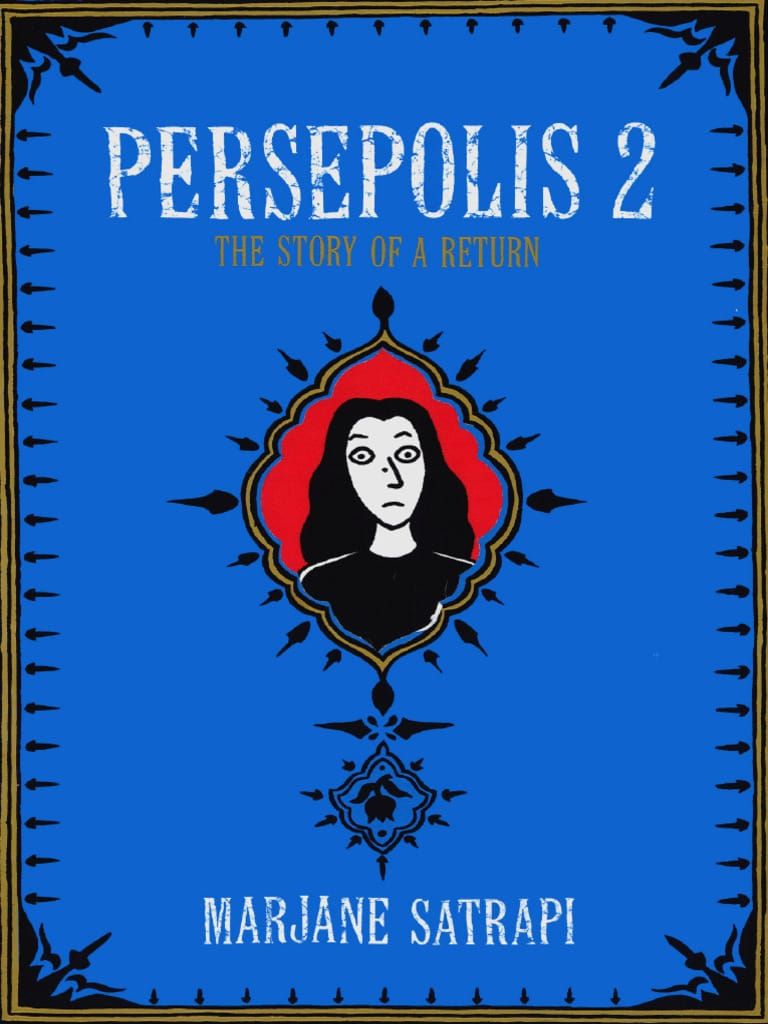
There have been a lot of high profile comics professional’s deaths of late. As I’m not a timely newsletterer, I haven’t done much in the way of an in memoriam. Tatijana Wood’s passing was one I may do at the end of the year, so influential to my coloring tastes was she. With the sudden death of Marjane Satrapi though, I find myself positioned well to talk about her work and what it meant to me.
If there’s a modern canon for comics (yeah yeah I know,) Satrapi’s “Persepolis” sits comfortably near its top. The autobiographical work of her childhood in pre and post-revolution Iran (and her subsequent coming of age in France) is rightly highly lauded and studied the country (and world) over. Ask a non-comics reader to name a comic they’ve read and there’s a high probability “Persepolis” will be what they say. Or at least part 1 is.
I first read both “Persepolis” I and II, probably when I was a little too young to understand it fully. I paired it with a re-read of “Maus,” which I definitely read when I was too young, as they are often talked about in the same breath. I’ve since read it multiple times and it remains as affecting, funny, and insightful as that first read.
Satrapi’s portrayal of herself is clear-eyed throughout, capturing the wonders of youthfulness even amidst a national turn towards religious fundamentalism and authoritarianism, while the terror and travesty of what she is living through is neither minimized nor exaggerated. It contains warnings about how such illiberal, oppressive regimes happen - America is going through its own version right now - as well as its consequences but its purpose is less to warn, unlike “Maus,” which is a reminder, a family reckoning, and an exorcism all in one.
It is instead her story, a portrait of people and life in Iran as she witnessed it, full of smuggled Michael Jackson CDs and jean jackets, tortured family members and murdered neighbors, happy afternoons in the streets and terrified evenings in their homes.
I am aware that Part II of “Persepolis” is discussed far less than its first, mostly because the saliency of a fraught geopolitical background isn’t as present. It is not a story of a child any more, as Satrapi is now in high school and college. Yet I find it is as indispensable a story as the other; a wartier portrayal of herself and the country she finds herself in: France.
If you have only ever read the first, do yourself a favor and read part II. Expand your horizons. See Marjane Satrapi as more than her childhood, just as she asks us to see Iran and its people as more than its extremists.
My Cats
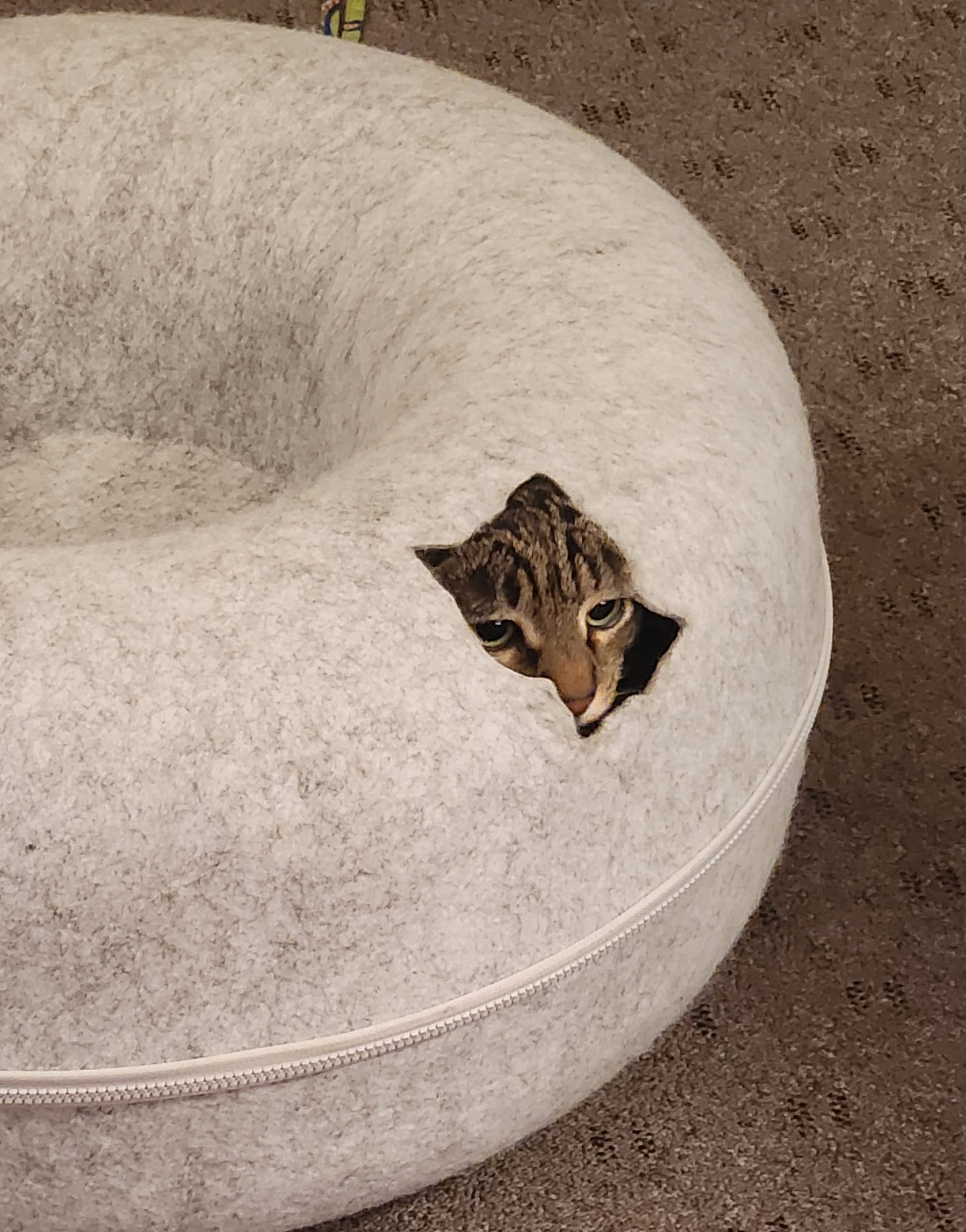
Catch y’all on the flip side.
Comments ()