"Clementine" Book 3
The Walking Dead's most successful spin-off (yeah I said it) comes to an end and I'm excited to review it...about a year after it was published.
If this is a little disordered, I apologize. I began this review last year. Then, my thoughts were fresh. Now, they are more clarified but hazy through the fog of time. Let’s see if I can thread that needle.
I acquired a copy of “Clementine” Book 3 a couple months after it had come out - I’d forgotten to preorder it, unlike the previous two volumes. You all know my love for Tillie’s works and how much they mean to me, so this was quite the oversight; one easily corrected, of course. And after waiting two years for the conclusion to the trilogy, what was another couple months?
I cracked open the book before bed, expecting to read about a quarter before falling asleep. I ended up devouring the whole thing. Lying awake after, unable to rest, my mind was a swirling mess as I grappled with the book and my feelings. Were I not so tired, I likely would have flung the sheets aside and sprung out of my bed to write this review.
Spoilers ahead.
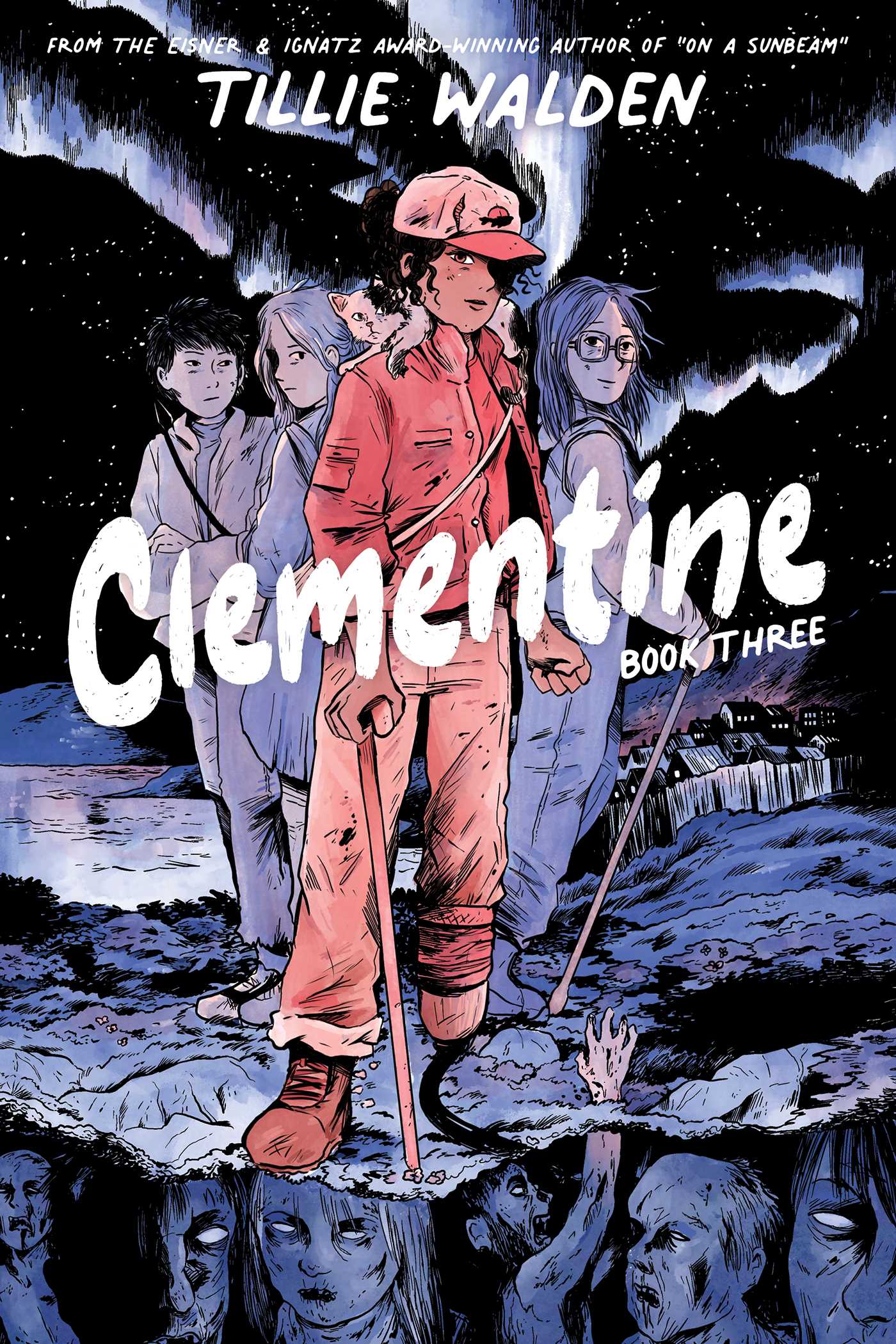
Written, Illustrated, and Lettered by Tillie Walden
Grey-toned by Cliff Rathburn
In the author’s note at the end of “Clementine” Book 3, Tillie talks about how each of the books paralleled a different part of her life and how that ended up reflected in Clem’s journey: the isolation of lockdown and living in its wake in book one, building a family in a world on (or well past) the brink in book two, and being a new mother in book three.
These fears are palpable throughout in overt (Olivia is literally a new mother) and subtle ways (how does one keep children safe in an unsafe world.) They lay the groundwork for the narrative direction as well as the twists and turns they take. I don’t object to these twists and turns, scary and difficult as they are, but where I struggle is with the book’s inciting incident. The moment which sends Clem spiraling, pushing her found family away, and into the arms of Maria, the cultish leader of the Gardeners. If you’ve read it, you know what I mean. If you haven’t, here’s one last warning.
Okay?
You good?
Okay.
Around the fifty page mark, after the successful birth of Olivia’s child, Clem’s girlfriend Ricca collapses onto the streets next to her. Dead. While it’s never stated why, it appears to be a brain aneurysm, perhaps related to the degeneration of her eyesight. It is a devastating moment and one Tillie sits in. Sudden and shocking, it is well within the tradition of “Walking Dead” deaths prior to this and, sadly, to life.
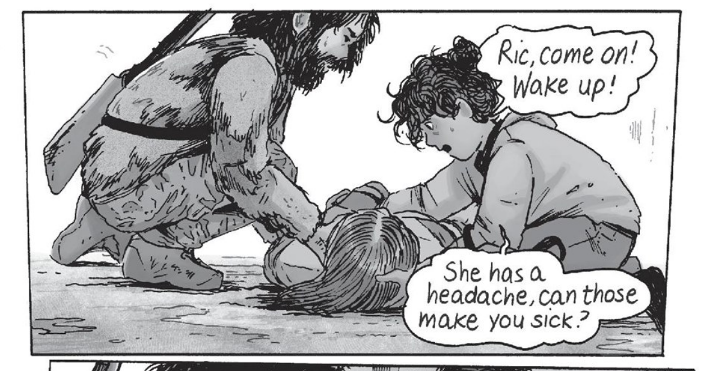
People die. They die in ways expected and unexpected. Some go quick. Some linger on. Some through violence and other through peace. What’s so affecting about Ricca’s death, then, is less the suddenness but in how mundane it is.
To Clem, this mundanity is unnatural. Death isn’t quiet. It’s loud and violent and, most importantly, external. It is preventable. It is something she has control over and that loss of control makes her vulnerable and distraught. This change shakes her worldview and frightens her deeply; so deeply she retreats into what she knew best - killing walkers - and becomes susceptible to Maria, a woman who validates her unhealthy impulses rather than challenges them.
More on her in a sec.
When I read Ricca’s death, I cried. I weeped. I sobbed. I gnashed my teeth. It poked at something raw in me and left me hollow, devastated, in ways that can only be done by an expert hand at a perfect, unplannable moment. I was left angry at the moment and its cruelty.
No. Not cruelty. It is not cruel. It is harsh. Bleak. Brutal. But not cruel.
I don’t think, as some other readers seem to, that this death was out of nowhere. Ricca’s previously deteriorating eyesight in Book 2 could easily have been caused by something in her brain or pressing on her optical nerves. Disease, injury, what-have-you, unnoticed until too late, is what gets her. It is a feature, not a bug, of the relative peace they’d found since coming to Greenland.
Nor do I agree that it was poorly done. If there’s one thing Tillie does well, it's the messy emotions that come with adolescence and the long and seemingly endless transition into adulthood. Clem wasn’t going to have a reasoned and healthy reaction to Ricca’s death. Thus “Clementine” Book 3 is as much about Clem running from her feelings as it is about zombie-burying militia cults.
So, I understand why this moment happened the way it happened. I understand why it happened to Ricca. I understand it all, and I don’t disagree with the choice, but…I’m still angry.
I’m angry that Clem couldn’t be happy with Ricca. I’m angry that I can add Ricca to another list of Jewish characters who are either dead or long divorced from their Jewish roots not via story or character but by neglect. I’m angry that the story becomes more about Maria’s attempted putsch than Clem (or Olivia’s) grief.
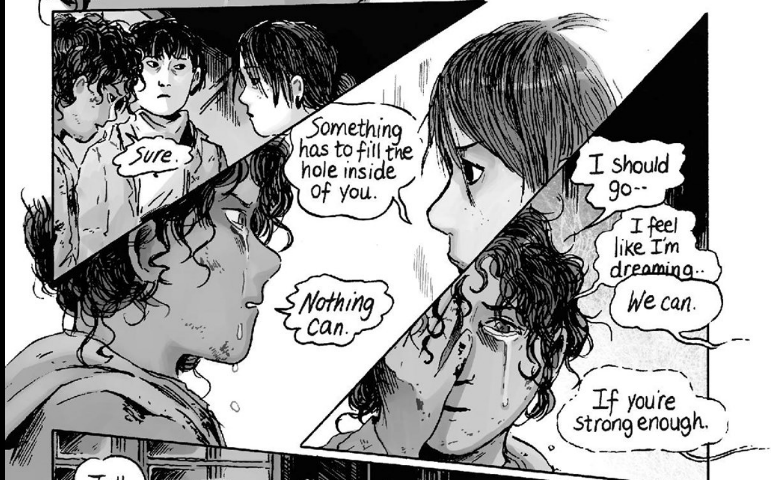
This putsch, which makes up the bulk of the book, continues Tillie’s critique of the toxic survivalism that permeates much of zombie fiction and our current historical moment. A very “Walking Dead” critique, it emphasizes hope and comradery, of humanity, without flinching from the horror and the difficult reality of living with others, building with others, in times of strife and of peace. It is finishing the thematic work of the trilogy and the series would feel incomplete without it.
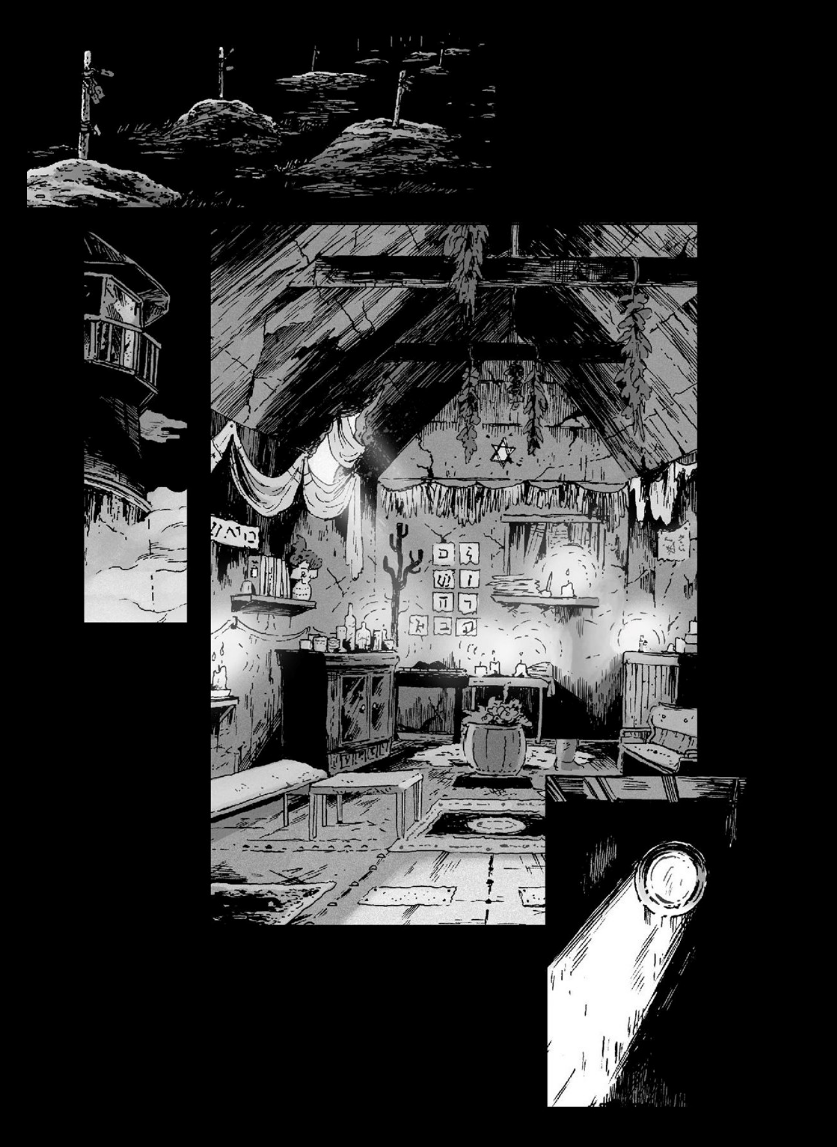
Maria is Clem’s shadow. Who Clem could have been without Ricca or Olivia or any of the people she’s met in her journey. Both are leaders who survived the world through strength and fortitude. Both are loners by nature and have a propensity for recklessness: Maria with her garden of buried walkers, Clem with her solo hunts for large, roaming packs. That, however, is where the similarities end.
Maria is bitter and controlling, thinking that the only way to survive is to be as harsh as the world. She has no sense of community, save for the one that serves her and is shaped by her. She prizes isolation, self-preservation, and an iron fist. She believes that fear and loss is the only thing that binds people. That only violence shapes us. Anything else is soft, and softness leads to death.
Only I can save you, cries the despot. Only I can shield you from the pain, says the jailer. Only I love you, cries the manipulator. Only I. Only I.
Lost in this conflict is Ricca. Her death permeates every aspect of Clem, yes; in every action she takes, every emotion she does, or does not, express, Ricca is there, yet we get precious few scenes of Clem processing, talking, reminiscing, remembering, feeling because she is running, hiding from the loss. Thus, the story does too.
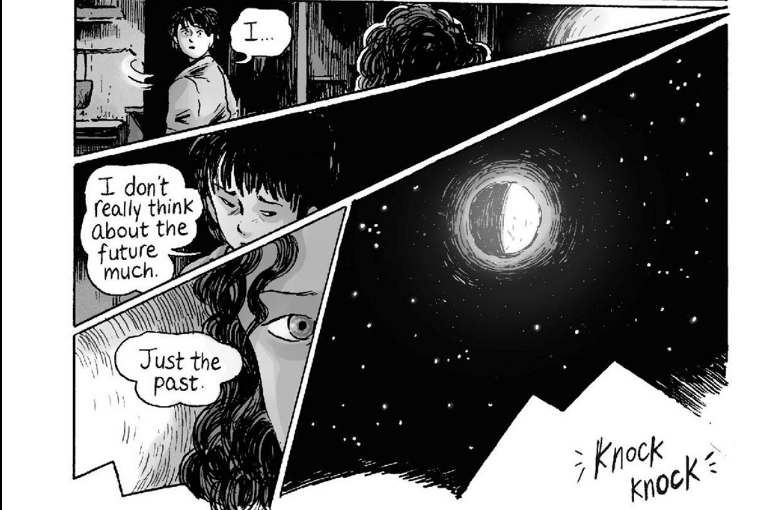
Ricca must fade into the background because Clem cannot confront this reality head on but it wasn’t inevitable that she fade entirely from the bulk of the story. In Olivia, we could have seen this. We could have had the reminders, the stories, the communal grieving that is shiva, in spite of Ricca being the only Jewish person of the group. Instead, Olivia is sidelined as soon as she and Clem have their falling out after Ricca is buried.
We are robbed of her perspective because, well, it’s not her story. It’s Clems. And Clem is isolating, throwing in with Maria, who by default becomes the driving force behind the narrative, with Clem’s grief a corollary.
Why harp on this? In part because the bones of the journey and the intent are solid. The portrayal of grief is raw and real and the storytelling choices cannot be argued with. This is the story of how Clem would deal with Ricca’s death. When Clem finally comes back to herself, ready to process, and visits Ricca’s grave, it’s as much a bittersweet gut punch as it should be.
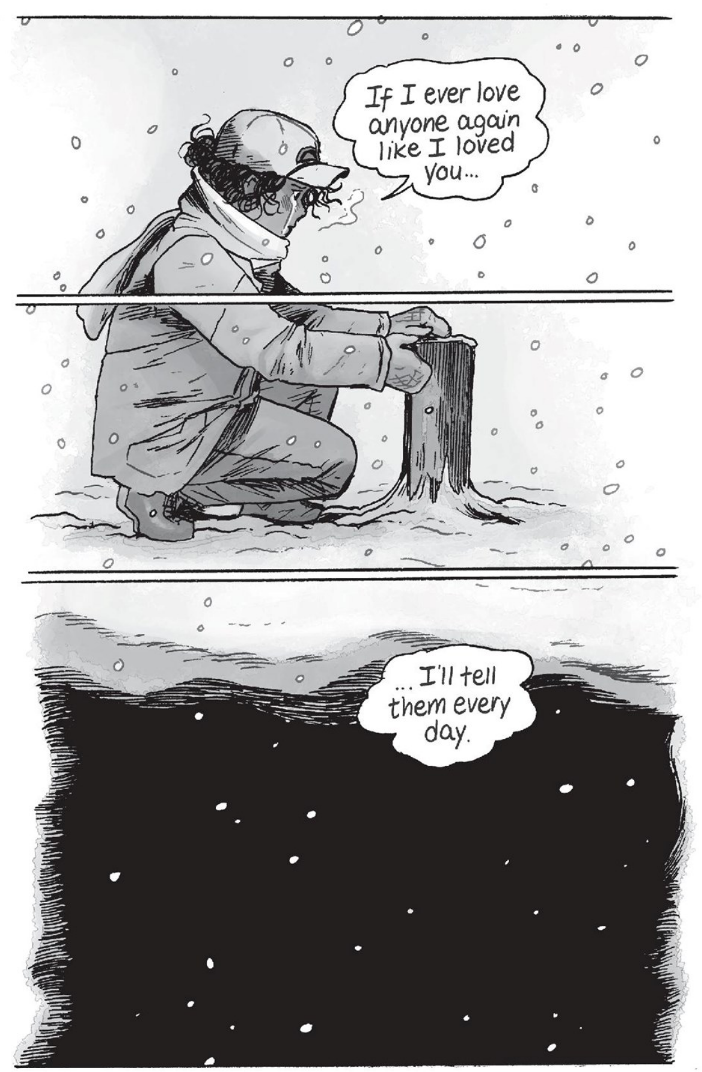
I felt Ricca re-enter the narrative. Her presence. Her warmth. For those few pages, those way too few pages, there she was. Literally, in the flashback, and figuratively when we see her gravestone, rocks and all. It is moving because the rest of the book is damn effective at bringing us along through Clem’s destructive, and ultimately redemptive, process.
It just sucks that this is the way we, the reader, have to grieve as well.
It is bad form to judge a book on what it could have done, or what it should have done. I know. But I still feel a profound loss when I think about what this finale could have been, had the exploration of Ricca’s death been more central to the narrative rather than only Clem’s emotional state. How the ending would have even more impact, even more meaning. Of course, I also still wonder and wish for a happier ending, as antithetical to the “Walking Dead” universe that would be.
Let me end, then, on the book we did get. The book that speaks to this process of grief and loss and hope. The book that opens on the scene of Olivia mourning the loss of her baby’s father while struggling in the pain of childbirth. In it, Clem holds her hand and says: “The pain will end, I promise.”
“That’s where you’re wrong,” Olivia replies. “It’ll never end.”
For a while, it seems Olivia is right. It’s certainly what Clem thinks after Ricca’s death. But she was wrong. This pain does end. But Clem is wrong too. The pain never truly ends. It only lessens. Slowly, with care, and with the right people, it can shrink until it is no longer all-consuming, all-encompassing, all-numbing, but is still forever with us, naught but a tiny, gentle reminder of its origin.

Comments ()