Climbing the Tower: Episode 10
Pour one out for Hoh. You remember Hoh? Right? RIGHT?!
Originally published in “The Webcomics Weekly #120: 300 more of these and we can make a Joke (1/19/21 Edition)” at Multiversity Comics.
Tower of God
Tower of God: Season 1, ep. 51-58
Episode 10 - “Beyond the Sadness”
Updates: Mondays
By SIU
What do you desire? Money and wealth? Honor and pride? Authority and power? Revenge? Or something that transcends them all? Whatever you desire—it can be yours if you climb the tower.
After a short rest, and a longer than usual break between reviews, we’re back with the Final Four episodes Tower of God season one. Last time, if you remember, there were a ton of changes between the comic and the show (“Tower of God” and Tower of God) and that remains true here. In fact, it feels like this might be the episode with the most consequential changes thus far. The adapters really did a lot of cutting and rearranging and editing to fit all of these chapters into a single episode.
I should note that chapter 58 alternates between scenes of Bam facing Evankell, I think, and the “fight” to support him, while in “Beyond the Sadness” the two are presented as a whole, one after the other, cutting off at Bam seeing the big spooky eye.
“Tower of God,” actually, is far more disjointed and frenetic in its presentation of scenes throughout, as if it’s unable to remain focused long enough on one thread for it to conclude. While this choice does keep things from getting stagnant or stale, as there’s always the promise we’ll return to finish the conversation/fight/whatever, it does get very convoluted very fast. Like, Khun’s plan is so fucking complicated in the comic and reliant on coincidences and while he’s a master manipulator, even that felt like a bridge too far.
It also adds unnecessary drama into the aftermath of Endorsi’s fight against Quant. And that’s a problem with “Tower of God” as a whole: it’s so fucking convoluted and every new plot thread tries to make it even more complicated. Tower of God, on the other hand, tries to streamline these complications by aligning them with character motivations, dropping extraneous details, and all-in-all creating a more cohesive story.
In the past, this meant cutting out characters, combining them, removing scenes or changing dialog to carry a more “serious” air and thus removing the comedic asides that characterize “Tower of God” but would feel wildly out of place in Tower of God. It also meant removing concepts like Baang or the tedious discussions of rules that are way too complicated for their own good. It also meant taking what was once explained in text and turning it into subtext or communicated through the visual language of the show.
Unfortunately, “Beyond the Sadness” shows the cracks in this approach. Because the show has done its damnedest to pair down the exposition, moments that really, really need it don’t get their due and the episode becomes a slog, feeling like a drawn out lull rather than a pause or an arc in and of itself, like in “Tower of God.”
For example, Tower of God cut out that scene of Khun talking to Rak about his family and why he supported Bam & Rachel. It doesn't quite line up with the Bam of the show – he’d never open up like this – but the ensuing chewing out Khun gets by Rak is textbook Shonen motivation fodder and would’ve done a lot to help the episode feel less empty. It would’ve also been great to have that scene of Hansung Yu explaining what the deal with Urek Mazino was and why he’s so special.
The other two moments are ones that both “Tower of God” and Tower of God fail to seed and sell due to the weaknesses of narrative clarity but somehow Tower of God failed even more at selling them. The first is the “reveal” that Bam is an Irregular. I was convinced this was common knowledge, by Khun and Lero Ro at the very least, and so when everyone is shocked, the moment does not carry the same narrative weight as it should have. I know I’m slipping into simple critique of the whole now but the distinction between Regular and Irregular has been so poorly established beyond “one good, one dangerous” that it’s essentially meaningless beyond a signal that our main character is special.
It’s never been properly illustrated what a regular entrance to the tower looks like so we, the audience, have no frame of reference. “Tower of God” never took the time to do this and because Tower of God wanted to wrap up the entire “first season” in its first season, it didn’t think to structure the show with that in mind and slow down. I’ll probably do a moratorium of the entire thing at the end of episode 13, “Tower of God” (yeah, that won’t get confusing,) so I’ll save my thoughts for there.
The “irregular reveal” was sold better in “Tower of God,” interestingly, because of the interspersing of the scenes and the comedy, as well as the aforementioned Khun family scene. Since it’s less serious all the time, the scene doesn’t carry the same dire weight and so when Bam is revealed to be an irregular and they have the conversation afterwards, it feels less consequential and less like a twist. Plus, Khun centering his objections around potentially being kicked out of the family adds another layer to him, one which is left ambiguous in Tower of God.
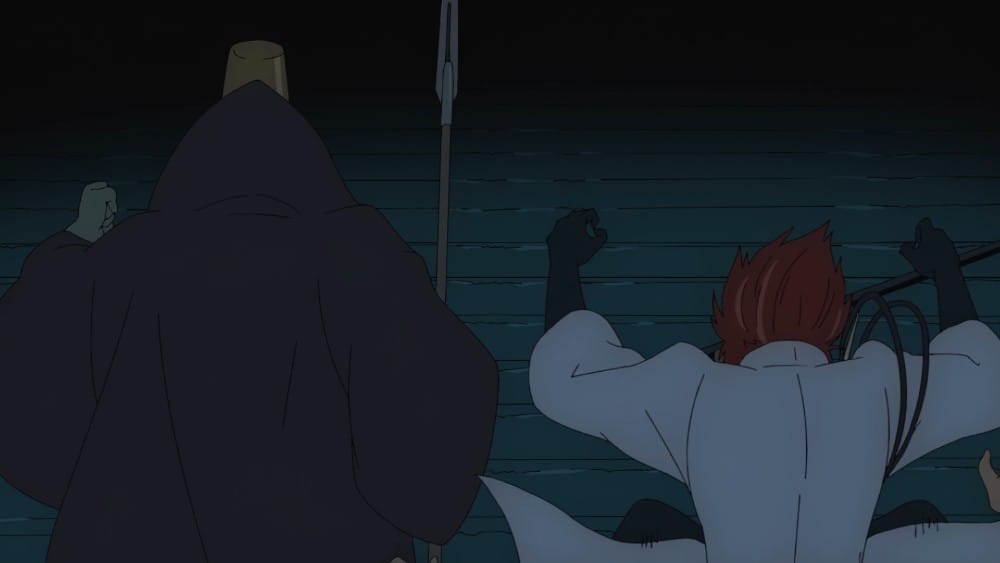
The other major moment is when the teacher of the Wave Controllers (I think that’s what Bam is) is revealed to be a spy for the Imperial Court, essentially. However, it’s implied that the actual teacher was, I dunno, hollowed out or something and taken over at some point during these sets of tests, which does not track in the slightest. Both Tower of God and “Tower of God” play this up like it’s some grand reveal but I could name the amount of times I saw this character on one hand. Hell, he appears ONCE, maybe twice, in Tower of God beforehand.
This is why, despite it being one of those eleventh hour twists that don’t mean jack, “Tower of God’s” worked better. We actually have a sense of who the character is, and even their name before “the reveal,” whereas he’s just a funny background extra in the show. Well, that and the tongues. And the emphasis that this is indeed a person wearing a weird sheep snowball skin who talks out of its mouth and not just eyeballs inside a mouth. That’s just nasty and helps sell the uniqueness and threat of the character. His conversation is also more enlightening in “Tower of God” as to some of the larger questions of the nature of the Tower’s hierarchy and whatnot.
The last two changes I wanted to bring up were show originals (as far as I’m aware) that I really liked. Were the season to have been paced differently, I think they would’ve been more impactful, but I digress. The scenes revolve around the change in the relationship between Hoh & Serena. Hoh’s funeral and Serena deciding to leave the Tower (or the tower tests? Again, the larger picture is really, REALLY poorly established) allow their arcs to conclude in a way that makes me wonder if this wouldn’t have been a better place to either 1) close the season or 2) been the midpoint instead. It’s a clear end point and I appreciate how it illustrates the comradery between these competitors turned friends.
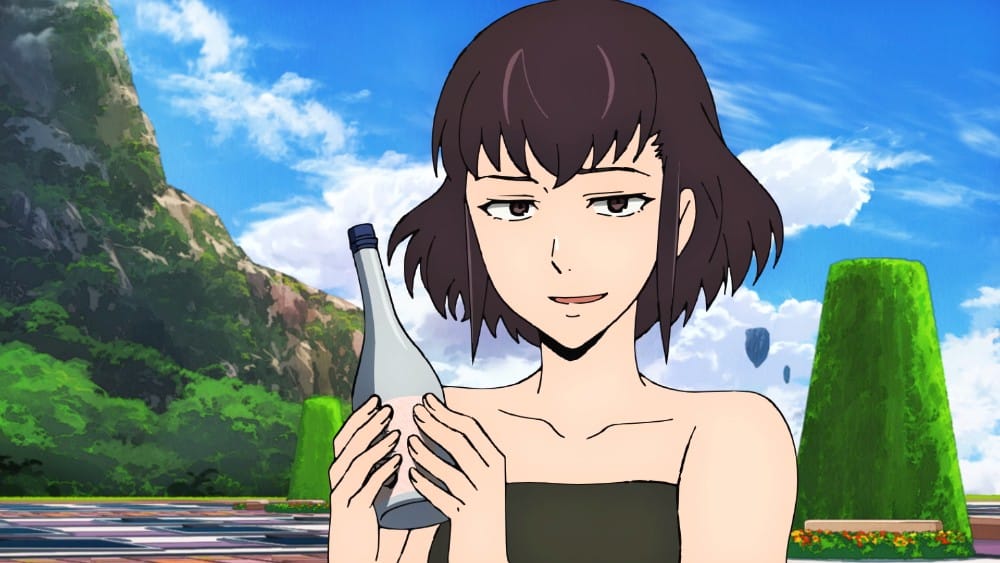
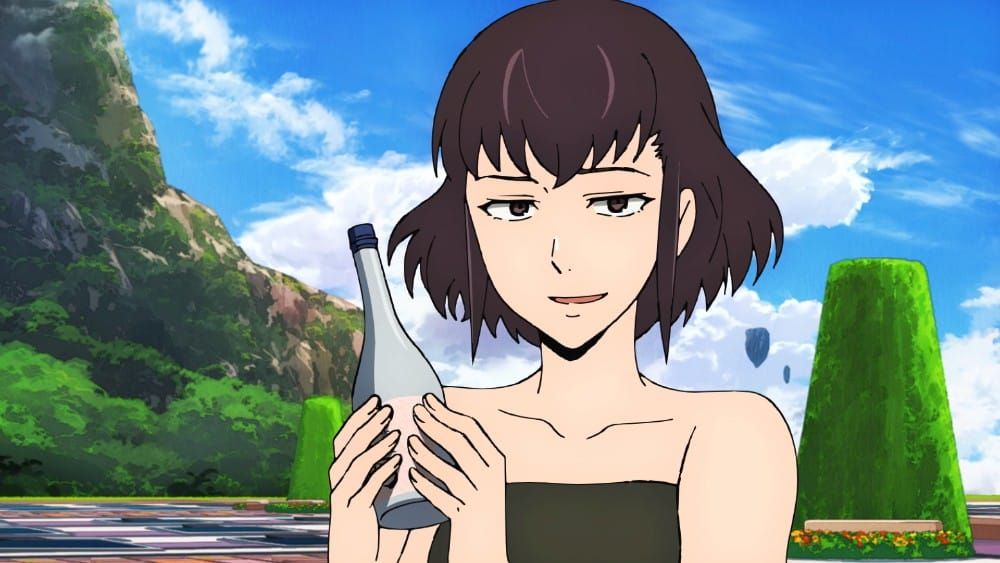
Hoh was kinda a dick in the show but clearly tortured and consumed by his demons. In the comic he’s just a homicidal ass. Serena is deeply affected by Hoh’s actions and passing and, considering she also knows she failed the test, this prompts her to take her leave in a bittersweet moment that preserves the connection between her and Shibisu that’s in the comic without having to do another isolated drinking scene. Instead, we get that group scene and it’s hilarious, contrasting with the lengthy and sad burial of Hoh.
I do have to mention again, though, that death in this show (and comic) is just...such nonsense. This is maybe the first confirmed death we get because what does and does not cause death is nebulous at best in this universe. The stakes of death are never clarified because characters don’t treat it as such and so it’s weird that Hoh gets so much time spent on him when we don’t know who of the others were straight up murdered by contestants/test administrators and who were just seriously injured and failed.
Anyway, there were a lot of other rearranges and small changes as per usual, like how the Yuri scene, which is a short, pointless diversion, was moved from right after the end of the test in Chapter 51 to slightly later in the events of the episode or how they changed the name of the test to Guardian’s Test from Administrator’s Test, which was a bad choice and just added more confusion even though it is technically more accurate. But there were too many to talk about individually.
In two weeks, it’s the home stretch with the first of a two-parter, “Underwater Hunt, Part 1.” See you then!
Last Episode
 Elias Rosner