Climbing the Tower: Episode 8
Baang to the max!
Originally published in “The Webcomics Weekly #114: Webcomic Sweep (11/24/2020 Edition)” at Multiversity Comics.
Tower of God
Tower of God: Season 1, ep. 38-43
Episode 8 - “Khun’s Strategy”
Updates: Mondays
By SIU
What do you desire? Money and wealth? Honor and pride? Authority and power? Revenge? Or something that transcends them all? Whatever you desire—it can be yours if you climb the tower.
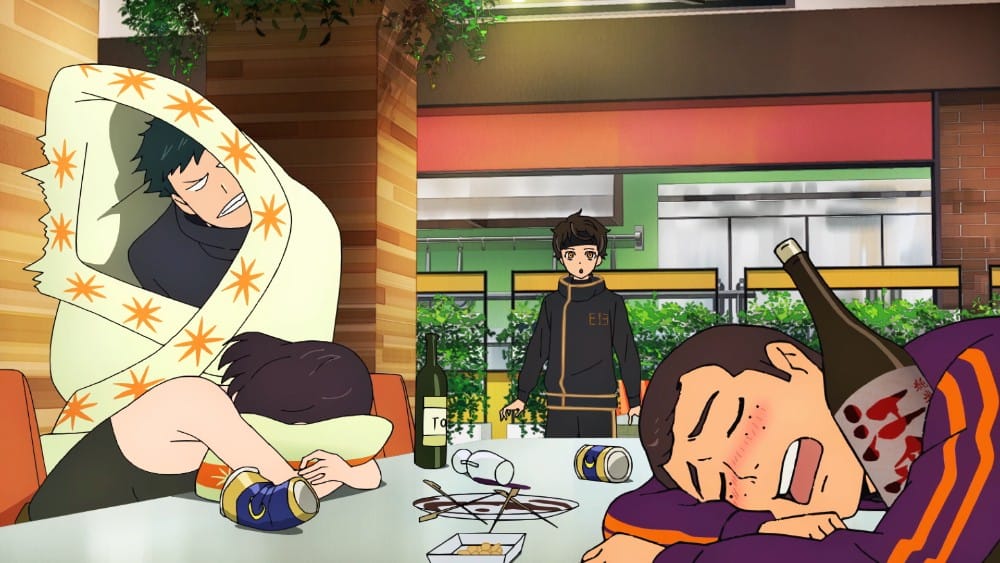
Each time I return to this column, I say that the comic “Tower of God” has a leg up on the show Tower of God because it has the space to add in details about the world and its mechanics that would only serve to slow the pace of the show down, something it really doesn’t need seeing as how the pace has already slowed from the earlier “two tests per episode” to “two episodes per test.”
I must apologize for misspeaking. “Tower of God” also suffers from the extra exposition.
Dear (tower of) god, were these chapters a slog to get through. While I felt that the episode spent a lot of its run time taking its sweet ass time getting to the end, it was kept engaging by the twists and turns and palpable sense of tension generated by the quality of the episode direction. That and Kevin Penkins’ amazing score, which emphasizes the dramatic over the comedic, keeping even light moments from feeling tonally dissonant. Not so with the comic.
The minutiae of how many Baangs Quant has left to use and how much he’s been allotted by the administrator has no analog for the audience to grasp, no useful scale, so it amounts to nonsense babble, like how Power Levels in Dragon Ball Z went from a useful tool for escalation to absolutely meaningless after Freeza’s eleventeenth transformation.
This isn’t a video game where I have a Shinsu bar that’s kept consistent by math, it’s a comic that works at the whims of the creator. What does or does not use Shinsu, and at what level, is up to SIU and, thus, meaningless to us, the readers. What matters is what the characters do and how they do it, and the effect that has on the environment, the other characters, and the narrative. The rest is filler.
This doesn’t mean I don’t love an arbitrary limit on power but it’s gotta be quantifiable in terms the audience can understand and one that raises the tension of the scene. Batman being down to his final three batarangs; Soma being all out of a key ingredient; or Deku breaking his arm each time he uses an attack - those are all stakes and limits we can grasp. Tower of God sidesteps this issue by just saying Quant’s Shinsu is limited for this test.
Is that amount? Is it power? Doesn’t really matter – though Khun does clarify later on that it’s quantity, taunting Quant about being careful so he doesn’t run out – because it’s implied that the reduction in power is to prevent him from killing the test takers (LOL) and from absolutely demolishing them. He’s still heads and shoulders above them all and so him having used up one Baang out of one and a half or whatever Baangs is a needless complication that slows the narrative down.
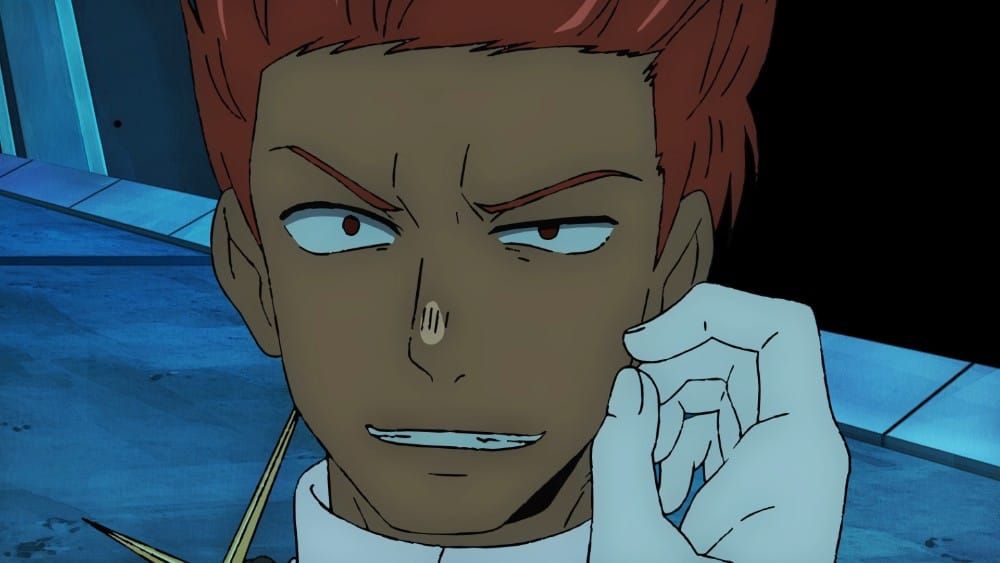
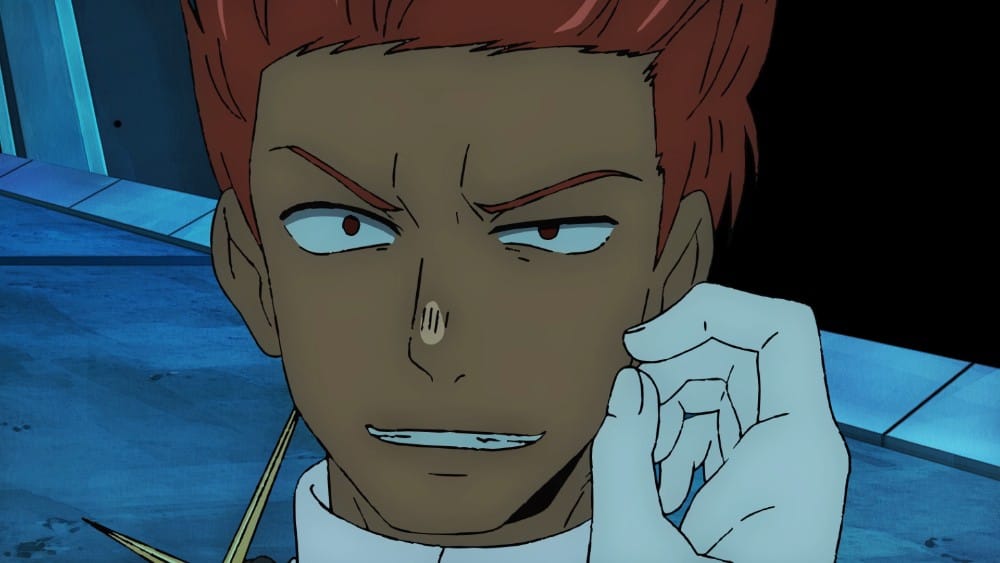
The purpose of this test is to demonstrate that, despite his lackadaisical attitude, Quant is intelligent and skilled, knowing the best way to take out multiple enemies at once, utilizing his speed, and hiding in the dark. It’s also to show that Khun is a master strategist that is able to out think Quant AND plan to set Bam up to succeed. There’s more lead-up in “Lunch and Tag” to drive home that Bam being on the other team matters to Khun, and is thus factored into his plan.
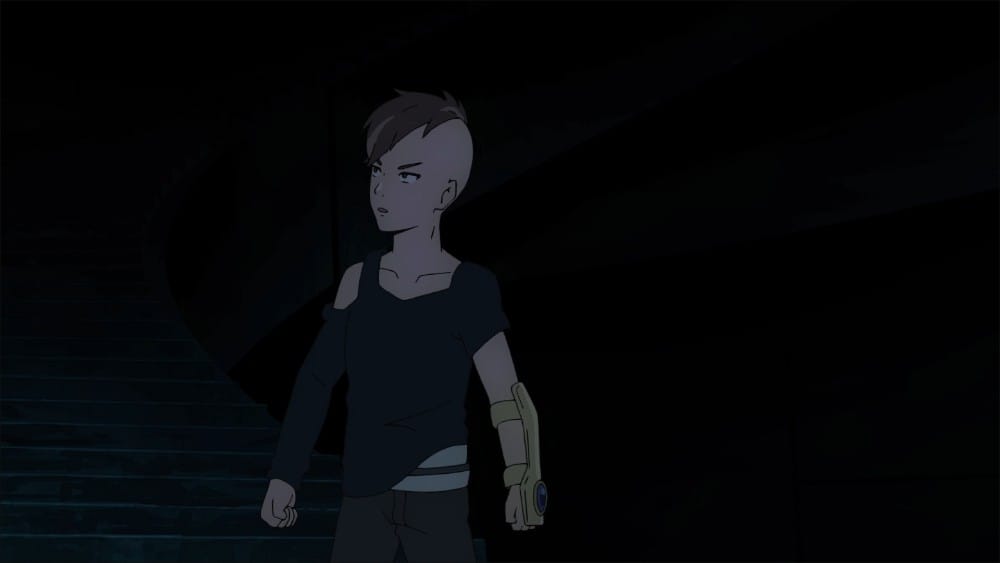
The comic wants us to see the battle between Team A & Team B as a central conflict while the show is content to highlight the issue the test raises without centering it. This is done mostly through a reduction in the times we cut back to Team B during Team A’s test – when we do, they’re significantly less overjoyed at Team A’s failures and Bam is more reserved and nervous on behalf of Khun – and by drastically cutting the number of Test Administrators discussing the performance of Team A.
In Tower of God, it’s just Hansung Yu & Lero Ro. This not only has the effect of cutting down the number of extraneous characters and streamlining the scenes, but focuses the commentary to just the important bits, establishing the intra-Administrator conflict and setting Hansung Yu up as a more sinister and knowledgeable foe.
“Tower of God” is content to use the “wise leader” trope to sell jokes and have Yu act as a foil to Lero Ro’s excitement and snap judgements. Again, this is down to a difference in character consistency I’ve touched on before. That said, the comic has the added benefit of giving Hansung Yu another great speech that is sadly missing from the show. One point “Tower of God!”
Another point goes to the small clarifications it makes. The “he’s trying not to kill them” is far clearer in the comic considering, uh, the show is very bad about establishing when someone is taken out and when someone is taken out. The same is with the limits on Khun’s bag and why he didn’t just duplicate the badge (though they may have snuck that bit into the exposition of the test in “Lunch and Tag”) and what in the everloving fuck the Spear Bearer Revolutionaries’ plan was. Though, that one doesn’t matter cause, well, Pericule kinda sucks and it’s easy to think his plan was just stab Quant with spears just like the last team failed to do.
The last couple changes are pretty significant. Aside from changing the time Quant waits from 32 minutes and 13 seconds to 111 seconds, thereby upping the urgency, the timeline of Khun’s plan and how it plays out are wildly different. Honestly, they don’t really matter but the twists in the show of who outplays who (or who we think outplays who) land far more effectively.
In "Tower of God," Leron 3 isn’t taken out right at the start and Anaak isn’t standing on top of Khun’s lighthouse. Technically events of the last episode but whatever. which was a GENIUS change since it set-up the ability for people to stand on lighthouses as well as turning the lights off to hide them, established how one could take out a lighthouse by rendering the user unconscious, and foreshadows Anaak standing on it later and using her whip to save Khun.
Since the show did away with the ridiculous technobabble of suspendium and whatnot, the explanation for how he has two lighthouses is simplified (magic bag of copying,) and Quant’s threat/discovery can be simplified as well, making him seem more impulsive and reckless (unconscious Khun=bye bye Anaak.) We’ve also seen Shinsu users survive high falls, hence his willingness to jump, and since it’s established he’s near his limit, we can surmise that Quant only has enough to survive the fall and not make it back up without having to sit through an itemized list of why he’s 3 Muu short.
Additionally, the “reveal” scene of how Quant got back up to the bridge plays out differently due to the mediums. Laure is recognizable by his voice in Tower of God and so doesn’t need to physically appear until Khun’s involvement in that little charade is revealed, whereas in “Tower of God” we need to see him to know who is helping Quant; a dialog balloon is not going to reveal who is talking as easily. It’s not a mystery that’s important to keep mysterious since it’s revealed less than two minutes/a chapter later but both accomplish the intended effect of building tension and questions. If the comic chose to not to show Laure, the who could it be would overshadow the why would they do this. If the show chose to show him, it would eat up time that’s unnecessary and reduce the immediacy of the question of why Laure is helping.
The actual big change is in Hoh’s reaction to Serena’s backstory reveal, something that felt rushed and out of nowhere in both places but I digress. “Tower of God” has him react much more coolly, like he’s still keeping up with the charade and that he’s not planning anything with Rachel, a fact we know about in “Tower of God” that is being kept from us in Tower of God. It makes the end of that scene feel less intense and worrying and more like Serena & Hoh have shared a moment, even if that moment is bittersweet.
In Tower of God, Hoh berates her for forgetting they’re all competitors. The underlying realization is the same – that to climb the tower, they have and may continue to have to use others as stepping stones – but in the show, Hoh disavows Serena of any notion of comradery whereas in the comic, the two are united in their understanding that the tower is cruel and the things they may have to do to each other are cruel. They are united only insofar as it is convenient and they should not begrudge each other when that ends. In the show, Serena’s more maudlin regrets and Hoh’s stern rebuke are 1) more in-line with Hoh and Serena’s characterization (a running theme I will probably never stop mentioning) and 2) a more effective moment of conflict and mystery.
What did the letter at the end say? Does his attitude have anything to do with it? These questions are moot in the comic as we know what was in the letter and so there’s no need to draw out a confrontation. Plus, by putting it in the middle of a chapter rather than at the end of an episode (though not the very very end,) it serves as a respite rather than needing to serve as a hook.
As always there are more small changes but I have to call it somewhere. Next time, “The One-Horned Ogre” and, I presume, some backstory for our third princess of Jahad, Endorsi.
Last Episode
 Elias Rosner