Climbing the Tower: Episode 7
I'm naht DroNk on t-Toware. uooor Dr-drank.
Originally published in “Webcomics Weekly #112: We're Older than Bilbo Baggins (11/10/20 Edition)” at Multiversity Comics.
Tower of God
Tower of God: Season 1, ep. 33-37
Episode 7 - “Lunch & Tag”
Updates: Mondays
By SIU
What do you desire? Money and wealth? Honor and pride? Authority and power? Revenge? Or something that transcends them all? Whatever you desire—it can be yours if you climb the tower.
You’d think that a change as small as what food a character orders wouldn’t have an effect on the story but you would be WRONG.
In characterizing Rachel, “Tower of God” takes a more social approach, even as she remains a loner. She is the one who first greets Endorsi in the bathroom. She orders take-out from the lunch counter, having a utilitarian conversation with the chef, and chooses to spend more money to ensure she doesn’t have to eat in the dining hall. She is the first name on the signature list and her photo is happy and smiling, showing her full face.
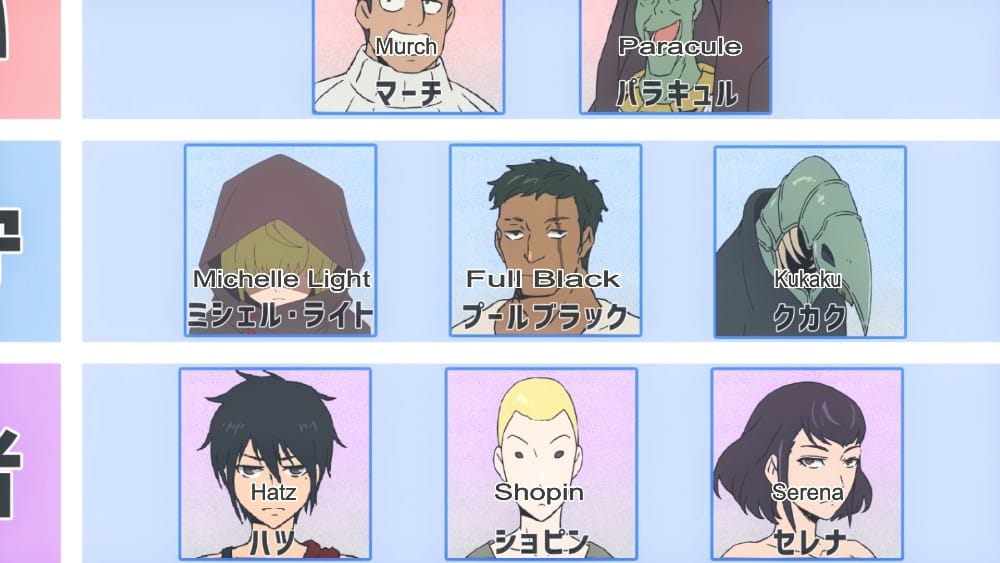
Tower of God, however, leans heavily into her aversion of people and emphasizes her dour, mysterious nature. We get a shot of Rachel sitting alone in her room in the dark, eating an apple that’s beginning to turn, as the sounds of friendship play over. We linger on her longing for the table that Bam is sitting at as she purchases another, singular apple from a stand without ever having to talk to the chef - 70% off this time too. Her photo is of her hooded face, sullen and looking down, and her fake name (Michelle Light) is prominent and called attention to.
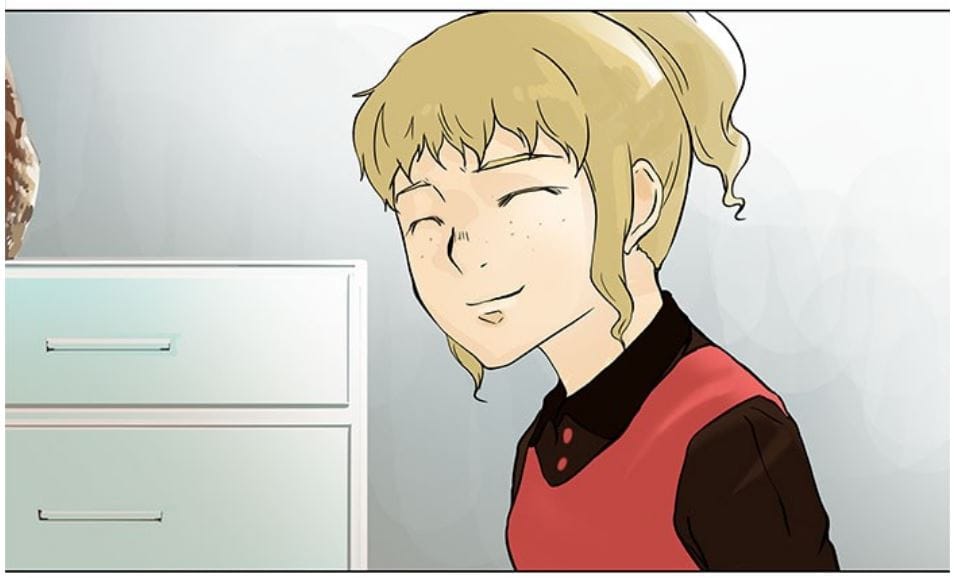
Endorsi has to be the one to strike up the conversation with Rachel, doing so after she notices Rachel slinking out of the cafeteria. Their conversation is also markedly different. While Endorsi does drive the conversation in both versions, Rachel is more hesitant and worried in “Tower of God,” whereas in Tower of God she is angrier, more insistent that Endorsi not say anything. Her tone is terse whereas the dialog in the comic makes it seem like she’s wary but not deathly afraid of being found out. She all but snaps in the show and it is her actions that end the conversation rather than Endorsi doing so.
There is clearly an internal conflict in both, as evidenced by Rachel’s silent contemplation, but it is more sinister and more toxic in Tower of God. The emphasis on secrecy and the utilization of a dark, cagey motif bolsters this reading such that her actions read as suspicious, but why and to what end is unclear.
In “Tower of God,” Rachel reads as embarrassed to be seen with Bam, as if he was a piece of her past she’s trying to excise and move beyond. In Tower of God, there’s a greater sense of jealousy and self-loathing.
This is true of Hoh as well. He is far more unhinged and wounded in the show, sobbing after a long day of training where everyone around him is doing better than he. He feels powerless and when we’re given a glimpse into his past, we see why this feeling hurts him. It’s a humanizing moment that establishes his desperation and the why of his jealousy of Bam. In the comic, this moment achieves similar ends, effectively setting up what he does with the strange note that he receives, but it lacks the same impact, partially because we don’t have to guess as to the contents of the note.
The handling of the note in Tower of God is very different. The show sets up and delivers on mysteries masterfully, withholding information until just the right time while making sure to lay the seeds beforehand. It falters from time to time but “Lunch and Tag” absolutely nails these kinds of moments. “Tower of God,” as is no surprise to anyone who’s read my previous reviews, is not very good at this because it prefers to present information as it’s revealed to the characters.
We know Khun is plotting something for the test. We know what is in the note and what Hoh is going to do with it. We know Endorsi suspects something is off with Rachel cause she flat out says it. The show is a far more enjoyable experience because it keeps me guessing without talking down to me or over-explaining.
Other changes between the two are along the same vein as previous episodes. Moment shrunk to save time or excise characters. Lines and shots changed to keep characters consistent and preserve the drama of the show rather than the comedy. Extraneous details like there being 10 great houses or how the rust Shinsu works are left out, as you can spend 10 panels explaining it in a comic to no great loss but if the show took the time to explain Baang, Myun, and Soo - utterly unnecessary knowledge for the narrative at this point - I would have decried it as a waste of 5 minutes. Oh, and changing the game title to Tag from Hide and Seek was a smart move, despite the game remaining convoluted and making the English title of the episode sound really stupid.
That said, the show does expand some scenes to re-inject some character-based humor, like changing why Laure felt indebted to Bam from: just finding his pillow to: literally offering to wash it after Serena drooled all over it AND creating a makeshift one from a sack and some beans from the chef. It’s a far more effective scene this way too. Bam comes off as resourceful and considerate while Laure is given a reason to actually feel indebted as Bam went out of his way to accommodate him.
In fact, this is the same with the signature scenes between Bam, Khun, Hatz, & Shibisu and Endorsi & Anaak. Hatz and Shibisu coming to beg for help is a new scene and both food scenes with the Princesses are expanded and changed to reflect that addition, building on the changes made to the tests back in “Position Selection.” With each episode I look at, it’s clear Tower of God has a fantastic set of directors and scripters who were able to take what worked with “Tower of God” and modify it for motion, modify it for 22 minute units, and modify it based on who the characters become rather than the confused people they are here.
Anaak benefits from this the most, though Hoh and Rachel and honestly everyone benefits as well. Her character feels more consistent and the message of the show, that her mother’s choice to go into hiding was the right one, even if it was tragic, rings truer to the central thesis Tower of God is building, namely that there is something wrong with the Tower system. It is cruel and it is self-serving and the competition is nothing more than pretense. In “Tower of God,” when asked if her mom regretted her decision, Anaak responds maybe. In Tower of God, she replies with a firm no, flashing back to the moment after a fight between her mom and dad.
By portraying the conversation after the fight as a bittersweet one, rather than showing the fight as a comedic “lovers spat” and then following it up with the expected “haha they hate each other” conversation, it emphasizes that Anaak’s mom’s choice was the right one for herself. That she was stifled under Jahad’s onerous and patriarchal rules and that the freedom in hiding was better than the power in servitude.

The fight in the comic reads as her being unsatisfied with her new life whereas she is clearly happy, even with her troubles, in the show. It is more romanticized, certainly, but the message is less muddy and the perspective is preserved. This is how Anaak sees her mom and her life before. Is it objectively true? Perhaps. Perhaps not. All that matters, however, is whether or not it’s true to Anaak.
In two weeks, we begin the second half of the season with episode 8, “Khun’s Strategy.” See you all then.
Last Episode
 Elias Rosner