Climbing the Tower: Episode 6
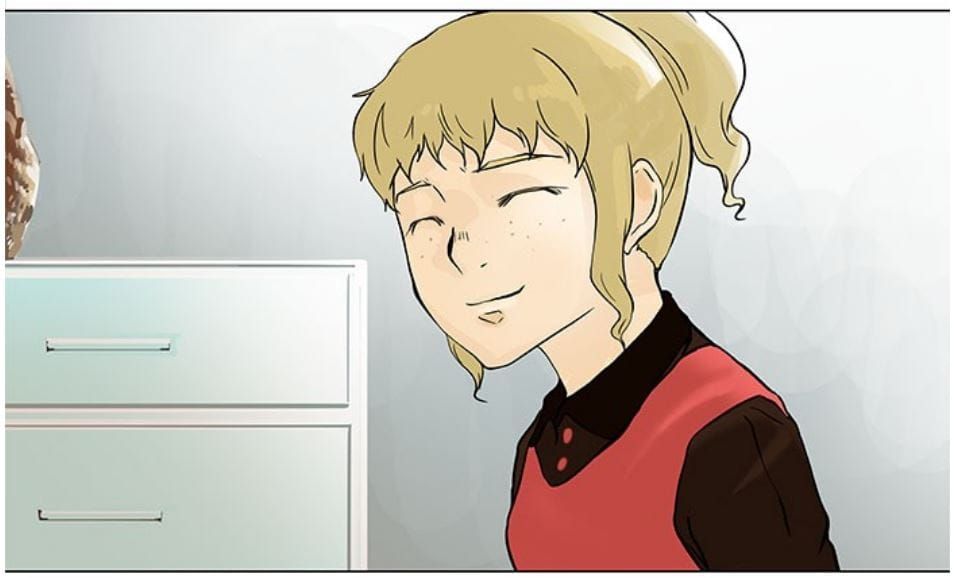
You know? I don't think Rachel smiles like this even once in the anime.
Originally published in “The Webcomics Weekly #110: A New Adventure Begins (10/27/2020 Edition)” at Multiversity Comics.
Tower of God
Tower of God: Season 1, ep. 27-32
Episode 6 - “Position Selection”
Updates: Mondays
By SIU
What do you desire? Money and wealth? Honor and pride? Authority and power? Revenge? Or something that transcends them all? Whatever you desire—it can be yours if you climb the tower.
As the season gets farther and farther in, Tower of God diverges more and more from the comic “Tower of God.” It’s not that the story is changing the narrative events but instead it is getting more confident in adapting the spirit of the comic. The consistent characterization in the anime versus the comic also helps with this, as the adapters know how to rearrange scenes or adjust dialog to shore up those weaker aspects of the original.
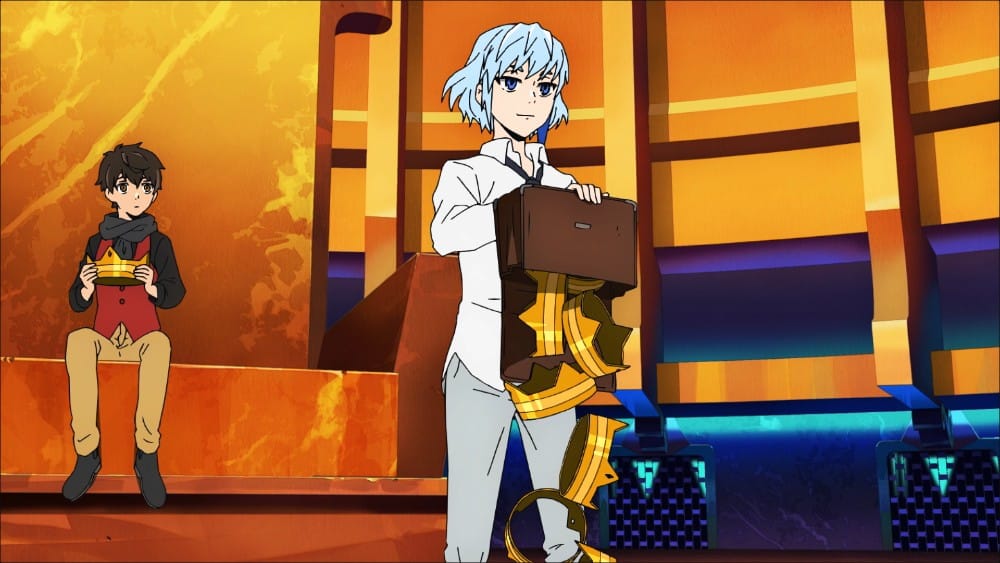
I’ve praised the clever ways they balance exposition, visual presentation, and character-based dialog before and Tower of God’s staff’s control of those elements are on full display in their handling of these changes. Some visuals are adapted one-for-one, such as the illustrations of each position for the titular positioning test, which look far more polished in Tower of God (no surprise there,) but other aspects are transformed too, like making the roles appear as if it were a video game selection menu.
That said, this is the first time where I felt that the anime’s adaptation choices, while more consistent, left more on the cutting room floor than I’d have liked. Sacrifices often have to be made for the sake of a coherent product that fits a different medium and “Position Selection” had to make some tough choices.
Most of the changes made are good, with the best being the choice to drastically simplify the position selection test’s rules & the ways they play out. Making the rules far less complicated allows for a greater focus on the character interactions and that same approach drives the shortening & clarifying of scenes like the one where Shibisu is trying to get the Black March to work. There’s a tightness to the exposition in that scene, as well as the one between Endorsi & Anaak in the hallway, that I particularly love. Of the characters the show chooses to highlight, I feel like I’m getting to know them better here than I have before, but this greater clarity comes at the expense of the larger cast.
“Tower of God,” thanks to the static nature of comics, can place a greater emphasis on rules and character names, and give minor characters screen time without incurring a greater cost (new models, additional voice actors, etc.) This is one area I think these chapters succeed where the episode does not. I am familiarized with them, even if more than half are disqualified or injured by the end of Chapter 32. It gives the Tower the feel of a larger place, so when these other characters become more major, it’s more natural. They’re not nameless, faceless extras but real characters, even if for much of the time they’re “unimportant.”
The idea of the Guide as a position is also brought up in the comic but not the show, which feels like an oversight and gets to an area I’m split on: how Tower of God handles the lore built up in “Tower of God.” As I’ve illustrated before, Tower of God has done a better job of integrating the lore and mechanics into the dialog, design, and approach to information revelations. There’s a greater sense of mystery and we’re asked to piece more together ourselves. Sometimes, however, this means entire bits of how things work are just. . .dropped.
Sometimes this is because the comic itself has no idea what it’s saying – the explanation of the Princesses of Jahad in Chapter 31 feels particularly impossible to follow – but other times it’s because the comic is very concerned with the how of the world of the Tower, to the point of over explaining. Over-exposition in the tutorial level of a video game is to be expected, however, and far less egregiously boring in print where my eyes can glaze over and I don’t lose any time. For all the clever tricks the anime uses to work in details of the world, the straight up removal of bits of knowledge like the Princesses are chosen every Hundred Years(???) may make sense for keeping the narrative on track but the questions it raises when kept in are better for the long term health of the show.
The last two differences this week I want to highlight are the scenes between Khun and Rachel in Chapter 27 and treatment of Rachel in general (and her relationship to Bam.)
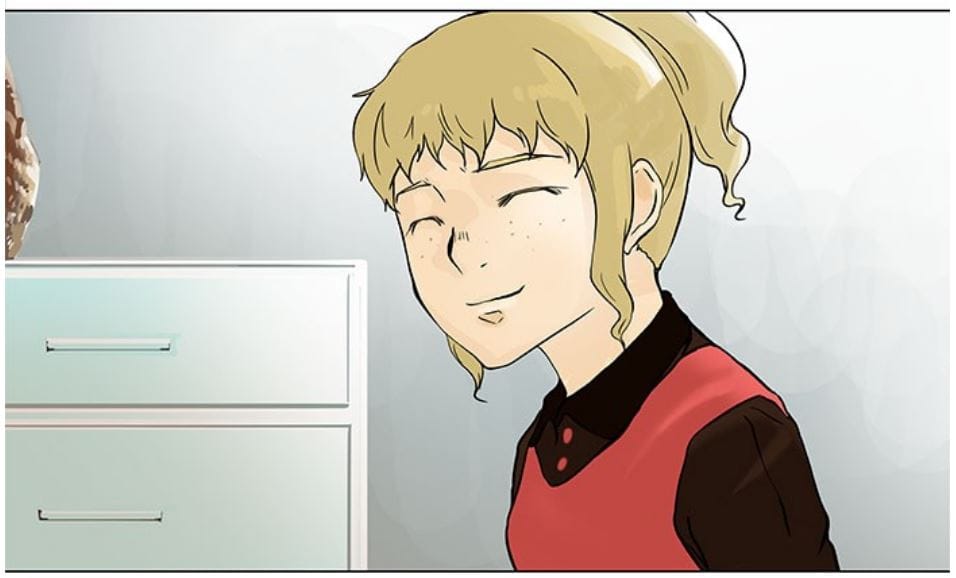
On the first, I think Chapter 27 of “Tower of God” handles this scene far better than “Position Selection” does, giving it plenty of time to breathe and delving more into Rachel’s psyche. Why are the allure of the stars so great for her? What about that goal sparks her imagination? And, most importantly, why is she afraid for Bam to know that she’s here? By removing these questions, it leaves Rachel as more of a mystery but it also makes her less compelling. It also changes the reason Khun plays along with it. Again, this may be because in the anime his motivations are better established and modified to fit his character arc, but it remains a noticeable change.
Ultimately, I believe this was removed and moved to save time – her talking about the stars was worked into a flashback at the start of the episode in a gorgeous sequence – but this brings me to my last question: which handles Rachel better, the anime or the webtoon? There is a coldness to her in Tower of God. Her loneliness and the pain that inflicts upon her is emphasized and the reason she did not go for the crown is left ambiguous whereas in “Tower of God” it’s explained. Her reasoning for not wanting Bam to know her identity makes sense in both but in the webtoon, there’s a hint of callousness to it, as if Bam will hold her back from achieving her dream, whereas in the anime it’s far more cryptic and much more explicitly callous.
This is made clear most in how she talks about her leaving to go to the tower. In the comic, she says she “left him” and “thought she’d never see him again.” There’s a melancholic nature to this exchange, perhaps because she feels guilty leaving Bam behind, as, according to her, she was his only friend. In the anime, she says she “had to abandon him” and that she was “certain that she’d never meet him again.” There is an ominous nature to this exchange, as if she was running away from him rather than running to the tower.
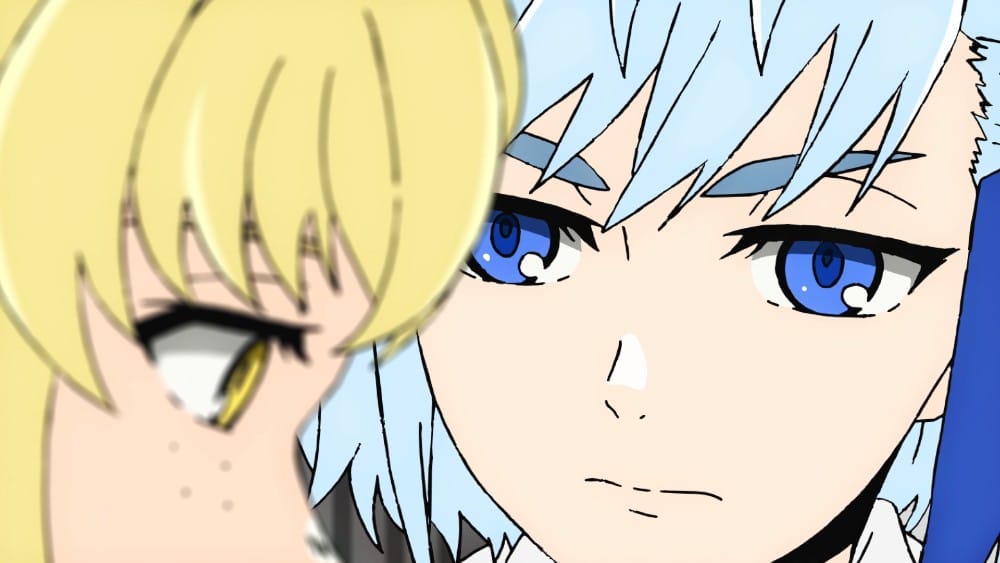
From the way SIU writes the flashbacks, it’s easy to see. Bam is a lot more of an annoyance and more selfish in his worship of her in “Tower of God,” lacking in the more defined, altruistic desire to be with Rachel he has in Tower of God. She may want to shed him because of that worship rather than some undefined but unsettling talk of “weakness.”
At the same time, she does care about Bam. She clearly misses him and feels that he has moved beyond her, with all these friends, all while she stays alone in her room, eating the chocolate she stole from Khun (in “Position Selection.”) This feeling is articulated in both via the dream scene, though it is elevated by Kevin Penkin’s sensational score in the anime.
Rachel is an enigma at this point. Why she was in a testing area AFTER Bam rather than before remains unanswered and other questions surround her. It will only be when we get an answer that the scenes here will fall into place. We’ll see which fit like a square peg in a round hole and which are like a perfectly paired wine.
Last Episode
 Elias Rosner